Introduction
Wi-Fi and wireless technology have become essential parts of modern digital life. Smartphones, laptops, smart TVs, gaming consoles, smart home devices, security cameras, wearable devices, and many other products rely on wireless connectivity to communicate and access the internet.
Instead of requiring physical cables for every connection, wireless technology uses radio waves and other forms of electromagnetic communication to transfer information between devices.
Wi-Fi is one of the most widely used wireless technologies, but it is only one part of a much larger wireless ecosystem. Bluetooth, cellular networks, wireless broadband, NFC, satellite connectivity, and emerging technologies all contribute to modern wireless communication.
Understanding how Wi-Fi works, the different types of wireless networks, their benefits, security requirements, and future developments can help consumers and businesses make better technology decisions.
What Is Wi-Fi?
Wi-Fi is a wireless networking technology that allows compatible devices to communicate over a local network using radio signals.
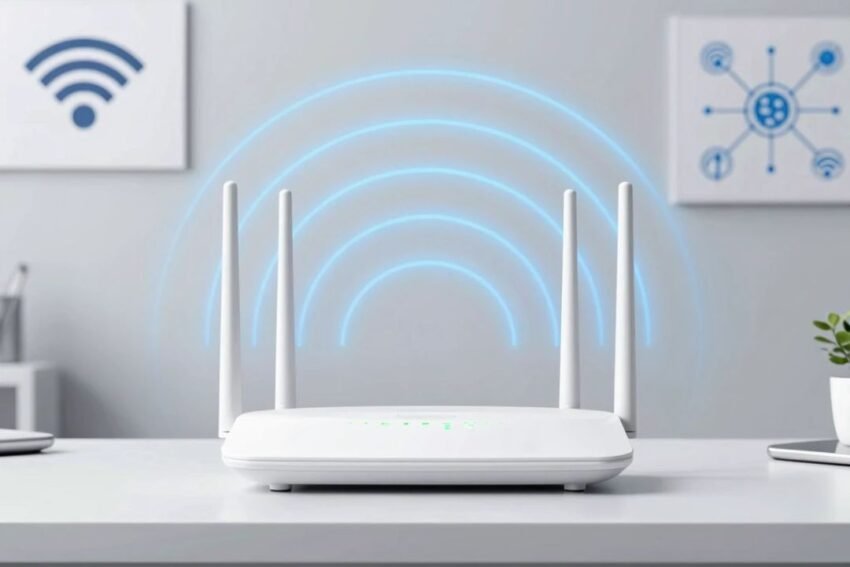
A typical Wi-Fi network includes a wireless router or access point that communicates with connected devices.
Common Wi-Fi devices include:
- Smartphones
- Laptops
- Tablets
- Smart TVs
- Gaming consoles
- Printers
- Smart speakers
- Security cameras
- IoT devices
Wi-Fi can allow these devices to communicate with one another and access the internet through a connected router.
How Does Wi-Fi Work?
Wi-Fi works by transmitting data through radio waves.
A wireless router or access point sends and receives radio signals. Devices equipped with Wi-Fi hardware communicate with the access point using compatible wireless standards.
When you open a website on a smartphone, for example, the phone sends data through the Wi-Fi connection to the router. The router then forwards the traffic to the internet through the connected broadband service.
The response travels back through the router and Wi-Fi network to the smartphone.
This process happens extremely quickly, allowing users to browse websites, stream video, play games, and use cloud applications without a physical network cable.
What Is Wireless Technology?
Wireless technology refers to technologies that transmit information without requiring a physical wired connection.
Wireless communication can use different parts of the electromagnetic spectrum.
Examples include:
- Wi-Fi
- Bluetooth
- Cellular networks
- NFC
- Satellite communication
- Wireless broadband
- Radio communication
- Infrared communication
Each technology is designed for different purposes.
Wi-Fi is generally focused on local wireless networking, while cellular technology provides broader geographic connectivity.
Wi-Fi Standards
Wi-Fi technology has evolved through multiple generations.
Earlier standards provided relatively basic wireless connectivity, while newer generations offer improvements in speed, efficiency, capacity, and performance.
Major generations include:
- Wi-Fi 4
- Wi-Fi 5
- Wi-Fi 6
- Wi-Fi 6E
- Wi-Fi 7
Newer generations are designed to support increasingly demanding applications and larger numbers of connected devices.
Wi-Fi 4
Wi-Fi 4, based on the 802.11n standard, represented a major improvement over earlier Wi-Fi generations.
It introduced technologies that improved wireless speed and range.
Although newer standards are now available, Wi-Fi 4 devices can still be found in older networking equipment.
Wi-Fi 5
Wi-Fi 5, associated with 802.11ac, significantly improved wireless performance.
It became widely used in home routers, laptops, smartphones, and other consumer devices.
Wi-Fi 5 introduced higher throughput and improved support for multiple devices compared with older generations.
Wi-Fi 6
Wi-Fi 6 was designed to improve efficiency in environments with many connected devices.
It introduced technologies that help networks manage wireless traffic more effectively.
Benefits can include:
- Better network efficiency
- Improved performance in crowded environments
- Lower latency
- Better support for multiple devices
- Improved power efficiency for compatible devices
Wi-Fi 6 is particularly useful for smart homes, offices, schools, and other environments with many connected devices.
Wi-Fi 6E
Wi-Fi 6E extends Wi-Fi 6 capabilities into the 6 GHz spectrum where supported by local regulations and compatible hardware.
The additional spectrum can provide access to more wireless channels and reduce congestion in suitable environments.
Wi-Fi 6E can be useful for high-performance applications such as:
- High-resolution streaming
- Gaming
- Video conferencing
- Large file transfers
- Advanced wireless networking
Wi-Fi 7
Wi-Fi 7 is the next major generation of Wi-Fi technology.
It is designed to improve throughput, reduce latency, increase capacity, and provide better performance for demanding applications.
Wi-Fi 7 can support technologies designed to use multiple frequency bands more effectively.
Potential applications include:
- Cloud gaming
- AR and VR
- 8K media
- High-speed file transfers
- Smart homes
- Enterprise networking
- Industrial wireless systems
Wi-Fi 7 is an important development in the future of wireless connectivity.
Wi-Fi Frequency Bands
Wi-Fi networks commonly operate across different frequency bands.
The most important bands include:
- 2.4 GHz
- 5 GHz
- 6 GHz
Each band has different characteristics.
2.4 GHz
The 2.4 GHz band generally provides better range and can penetrate obstacles more effectively than higher-frequency bands.
However, it can be more congested because many devices use this spectrum.
5 GHz
The 5 GHz band can provide higher speeds and access to more channels, although its range is generally shorter than 2.4 GHz.
It is commonly used for high-performance home and office networks.
6 GHz
The 6 GHz band provides additional spectrum for compatible Wi-Fi technologies such as Wi-Fi 6E and Wi-Fi 7.
It can help reduce congestion and support high-performance wireless applications.
Wi-Fi Router vs Access Point
A Wi-Fi router typically combines multiple networking functions.
It can provide:
- Wireless access
- Routing
- Internet sharing
- DHCP
- Basic firewall functionality
A wireless access point primarily provides wireless connectivity to an existing network.
Large businesses may use multiple access points connected to a wired network to provide wireless coverage across a building.
Mesh Wi-Fi Technology
Traditional routers may struggle to provide strong wireless coverage throughout large homes.
Mesh Wi-Fi systems use multiple wireless nodes to provide broader coverage.
A mesh network can help reduce dead zones and improve connectivity across:
- Large homes
- Multi-story buildings
- Offices
- Schools
- Hotels
Instead of relying on one central router, multiple nodes work together to provide wireless coverage.
Benefits of Wi-Fi Technology
Wi-Fi provides several important advantages.
Mobility
Users can move around while remaining connected.
Convenience
Devices can connect without physical cables.
Scalability
New devices can often be added without installing additional network cables.
Cost Efficiency
Wireless networking can reduce cabling requirements.
Flexibility
Wi-Fi can support many types of devices and applications.
Smart Home Support
Wi-Fi provides connectivity for many IoT devices.
Wireless Technology Beyond Wi-Fi
Wi-Fi is only one part of wireless communication.
Bluetooth
Bluetooth is commonly used for short-range communication.
Examples include:
- Wireless headphones
- Keyboards
- Mice
- Smartwatches
- Car systems
- Speakers
NFC
Near Field Communication enables very short-range communication.
It is commonly used for:
- Contactless payments
- Access cards
- Device pairing
- Digital tickets
Cellular Networks
Cellular technologies such as 4G and 5G provide wide-area wireless connectivity.
They allow smartphones and other devices to connect to mobile networks across cities and countries.
Satellite Internet
Satellite networks can provide internet connectivity in areas where traditional wired infrastructure is difficult to deploy.
Wi-Fi and 5G
Wi-Fi and 5G are sometimes viewed as competing technologies, but they can also complement each other.
Wi-Fi is generally used for local connectivity, while 5G provides wide-area cellular connectivity.
A smartphone may use 5G outdoors and automatically switch to Wi-Fi when entering a home or office.
Future networks may increasingly combine Wi-Fi and cellular technologies to provide seamless connectivity.
Wi-Fi Security
Wireless security is essential because radio signals can travel beyond the physical walls of a building.
Modern Wi-Fi networks should use strong security standards and passwords.
Users should:
- Change default router credentials
- Use strong Wi-Fi passwords
- Keep router firmware updated
- Use modern wireless security
- Disable unnecessary features
- Create guest networks
- Monitor connected devices
Older security standards should be avoided when modern alternatives are available.
Guest Wi-Fi Networks
Guest networks allow visitors to access the internet without giving them direct access to the main network.
This can be particularly useful for:
- Homes
- Offices
- Hotels
- Restaurants
- Small businesses
A separate guest network can help isolate visitor devices from sensitive systems.
Wi-Fi and Smart Homes
Smart home technology depends heavily on wireless connectivity.
Connected devices can include:
- Smart lights
- Smart thermostats
- Security cameras
- Smart locks
- Smart speakers
- Appliances
- Sensors
As the number of smart devices increases, home Wi-Fi networks need better capacity and security.
Modern Wi-Fi technologies are designed to handle larger numbers of connected devices more efficiently.
Wi-Fi and Gaming
Gaming increasingly depends on fast and stable wireless connections.
Gamers care about:
- Low latency
- Stable connections
- High throughput
- Minimal interference
- Consistent performance
Wi-Fi 6 and Wi-Fi 7 can provide improvements for compatible gaming environments.
However, wired Ethernet can still provide advantages for devices where maximum consistency and low latency are priorities.
Wi-Fi and Streaming
Streaming services require reliable bandwidth.
High-resolution video can consume significant network capacity.
Modern Wi-Fi technologies can provide the performance needed for multiple simultaneous streams.
A strong Wi-Fi network can support:
- HD streaming
- 4K video
- High-resolution media
- Video conferencing
- Cloud gaming
Actual performance depends on internet speed, router capability, device compatibility, interference, and network congestion.
Wi-Fi and Remote Work
Remote workers depend on stable wireless connections for:
- Video meetings
- Cloud applications
- File sharing
- Collaboration tools
- Virtual desktops
- Business communication
A reliable home Wi-Fi network can improve productivity.
Users working from home should consider router placement, wireless interference, network security, and broadband capacity.
Common Wi-Fi Problems
Users may experience several wireless problems.
Slow Speed
Possible causes include:
- Network congestion
- Weak signal
- Old hardware
- Interference
- Too many connected devices
Dead Zones
Certain parts of a building may receive weak wireless signals.
Mesh Wi-Fi or additional access points can help.
High Latency
Latency can increase due to:
- Network congestion
- Weak wireless signals
- Long distances
- Poor routing
- Interference
Connection Drops
Frequent disconnects may be caused by interference, outdated firmware, overloaded hardware, or environmental factors.
How to Improve Wi-Fi Performance
Several steps can improve wireless networking.
Place the Router Correctly
Position the router in a central, elevated location when possible.
Update Router Firmware
Firmware updates can improve performance and security.
Use Appropriate Frequency Bands
Use 5 GHz or 6 GHz for compatible high-performance devices when suitable.
Reduce Interference
Keep the router away from sources of significant interference.
Use Mesh Wi-Fi for Large Areas
Mesh systems can improve coverage in larger properties.
Upgrade Older Hardware
Older routers may not support modern Wi-Fi standards.
Wi-Fi and AI
Artificial intelligence is increasingly influencing wireless networking.
AI-powered network management can analyze:
- Traffic patterns
- Device behavior
- Wireless interference
- Network congestion
- Performance issues
Future routers may automatically optimize channels, prioritize applications, and identify problems.
This can make home and enterprise networks easier to manage.
Future of Wireless Technology
Wireless technology is continuing to evolve.
Important future developments include:
- Wi-Fi 7
- Future Wi-Fi generations
- 5G-Advanced
- 6G
- AI-powered networking
- Edge computing
- Smart cities
- Connected vehicles
- Advanced IoT
- Private wireless networks
- Satellite connectivity
These technologies will create faster and more intelligent wireless environments.
Wi-Fi 7 and the Future
Wi-Fi 7 is likely to become increasingly important as compatible devices become more common.
Its improvements can support applications that require high throughput and low latency.
Potential use cases include:
- AR and VR
- Cloud gaming
- Smart factories
- Advanced video
- Wireless workstations
- High-performance home networks
As adoption increases, Wi-Fi networks will become more capable of supporting demanding wireless applications.
6G and Wireless Connectivity
6G is being developed as a future generation of cellular connectivity.
Potential goals include:
- Extremely low latency
- Higher capacity
- Advanced sensing
- AI-native networking
- Improved device connectivity
- Support for massive IoT
6G will not replace Wi-Fi completely. Instead, future wireless ecosystems may use Wi-Fi, cellular, satellite, and other technologies together.
AI-Native Wireless Networks
Future wireless networks may increasingly use AI to manage themselves.
AI could help networks:
- Predict congestion
- Optimize resources
- Detect interference
- Identify security threats
- Adjust performance
- Automate maintenance
This could create more adaptive wireless infrastructure.
Wireless Technology for Smart Cities
Smart cities require reliable wireless connectivity.
Applications can include:
- Traffic management
- Smart lighting
- Public safety
- Environmental monitoring
- Connected transportation
- Energy management
Wi-Fi, 5G, IoT networks, and future wireless technologies can work together to support these systems.
Wireless Technology in Business
Businesses increasingly depend on wireless connectivity.
Modern wireless networks can support:
- Employees
- IoT devices
- Cloud applications
- Video conferencing
- Inventory systems
- Security equipment
- Industrial automation
Enterprise Wi-Fi must therefore focus on capacity, security, reliability, and centralized management.
Challenges of Wireless Technology
Despite rapid progress, wireless networks face challenges.
Interference
Radio signals can interfere with one another.
Security
Wireless networks can be targeted by attackers.
Coverage
Buildings and physical obstacles can weaken signals.
Congestion
Many devices sharing the same spectrum can affect performance.
Compatibility
New technologies may require compatible routers and devices.
Cost
Upgrading networking equipment can require investment.
Conclusion
Wi-Fi and wireless technology have transformed the way people and devices connect to the internet. From smartphones and laptops to smart homes, gaming systems, businesses, and industrial equipment, wireless connectivity has become a fundamental part of modern technology.
Wi-Fi has evolved from earlier generations into advanced standards such as Wi-Fi 6, Wi-Fi 6E, and Wi-Fi 7. These technologies provide improvements in speed, capacity, efficiency, and latency while supporting increasingly demanding applications.
Wireless technology extends beyond Wi-Fi. Bluetooth, 5G, NFC, satellite connectivity, IoT networks, and emerging 6G technologies all contribute to the broader wireless ecosystem.
The future will likely bring even more intelligent connectivity through AI-powered networking, edge computing, smart cities, connected vehicles, advanced IoT, and next-generation wireless infrastructure.
For consumers, upgrading to modern Wi-Fi technology can improve home coverage, performance, and reliability. For businesses, advanced wireless networks can support cloud applications, remote work, IoT devices, automation, and digital transformation.
Ultimately, the future of Wi-Fi and wireless technology is about more than simply achieving faster speeds. It is about creating wireless networks that are smarter, more secure, more reliable, more efficient, and capable of connecting billions of devices in an increasingly digital world.