Introduction
Networking technology is evolving rapidly in 2026. Businesses, homes, data centers, mobile users, and connected devices all require faster, more reliable, secure, and flexible connectivity.
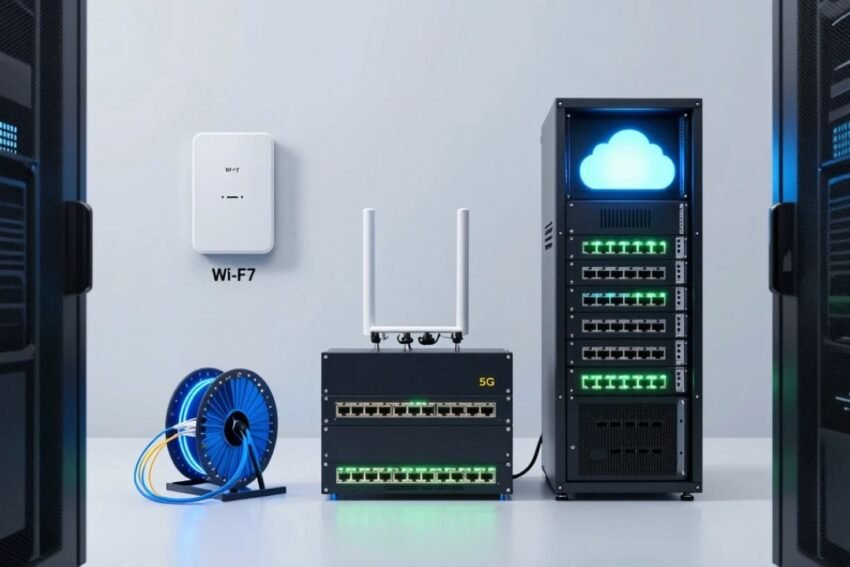
Modern networking is no longer limited to traditional Ethernet cables and basic Wi-Fi routers. Today, networks combine Wi-Fi 7, fiber-optic connections, 5G, Ethernet, cloud networking, edge computing, mesh systems, software-defined networking, and advanced security technologies.
Each networking technology has different strengths. Fiber is ideal for high-speed broadband and backbone infrastructure, Ethernet remains important for reliable wired connections, Wi-Fi provides flexible wireless connectivity, 5G supports mobile and fixed wireless communication, and cloud networks help organizations connect applications and users across distributed environments.
Choosing the right networking technology depends on factors such as speed, latency, coverage, reliability, scalability, security, budget, and the type of applications being used.
This guide explores the best networking technologies in 2026, how they work, their benefits, applications, limitations, and their role in the future of connectivity.
What Is Networking Technology?
Networking technology includes the hardware, software, protocols, and infrastructure used to connect devices and allow them to exchange information.
Networking technologies can include:
- Ethernet
- Wi-Fi
- Fiber optics
- 4G and 5G
- Cloud networking
- VPNs
- Network switches
- Routers
- Wireless access points
- Edge networks
- Software-defined networking
These technologies can work together rather than operating independently.
For example, a business might use fiber for its internet connection, Ethernet for desktop computers, Wi-Fi 7 for employees’ mobile devices, cloud networking for applications, and 5G as backup connectivity.
Wi-Fi 7
Wi-Fi 7 is one of the most important wireless networking technologies for 2026.
It is designed to deliver higher throughput, lower latency, and better efficiency than previous generations.
Wi-Fi 7 can be useful for environments with many connected devices.
Potential applications include:
- 4K and 8K streaming
- Cloud gaming
- AR and VR
- Smart homes
- Business networks
- High-performance wireless devices
Benefits of Wi-Fi 7
Wi-Fi 7 can provide several advantages.
Higher Performance
It is designed to support faster wireless data transmission.
Lower Latency
Improved responsiveness can benefit gaming and interactive applications.
Better Multi-Device Performance
Modern homes and businesses can have dozens or hundreds of connected devices.
Improved Wireless Efficiency
Advanced wireless technologies can make better use of available spectrum.
Wi-Fi 7 for Home Users
Wi-Fi 7 can be particularly useful for homes with heavy internet usage.
A modern household might connect:
- Smartphones
- Laptops
- Smart TVs
- Gaming consoles
- Security cameras
- Smart appliances
- Tablets
- Wearables
A Wi-Fi 7 router can help manage demanding wireless environments.
However, users need compatible devices to take full advantage of newer Wi-Fi capabilities.
Fiber-Optic Networking
Fiber-optic networking remains one of the best technologies for high-speed connectivity.
Fiber uses light to transmit data through optical cables.
It can provide:
- High bandwidth
- Low latency
- Long-distance communication
- Reliable performance
Fiber is widely used for broadband connections, data centers, enterprise networks, and internet backbone infrastructure.
Why Fiber Is Important
The amount of internet traffic continues to increase.
Streaming, cloud applications, AI, gaming, video conferencing, and connected devices all generate significant amounts of data.
Fiber provides the capacity needed to support these services.
For businesses and households with access to fiber broadband, it can provide an excellent foundation for modern internet usage.
Ethernet Networking
Ethernet is one of the most established networking technologies.
It provides wired communication between devices.
Ethernet is commonly used for:
- Desktop computers
- Servers
- Network switches
- Gaming PCs
- Security systems
- Data centers
- Business networks
One major advantage of Ethernet is consistency.
Wireless signals can be affected by interference and physical obstacles, while wired Ethernet connections generally provide stable performance.
Ethernet for Gaming
Gamers often prefer Ethernet connections because they can provide:
- Stable latency
- Reliable connectivity
- Reduced wireless interference
- Consistent performance
For competitive gaming, a wired connection can be especially useful when low latency and connection stability matter.
5G Networking
5G is transforming mobile networking.
Compared with earlier mobile generations, 5G is designed to provide higher speeds, lower latency, and greater device capacity.
5G can support:
- Smartphones
- Tablets
- IoT devices
- Connected vehicles
- Smart cities
- Industrial systems
- Fixed wireless broadband
5G for Home Internet
5G can also provide home broadband through Fixed Wireless Access (FWA).
Instead of using a physical broadband cable, a compatible router receives wireless connectivity from a cellular network.
This can be useful in areas where fiber or cable infrastructure is unavailable or difficult to deploy.
5G for Businesses
Businesses can use 5G for:
- Mobile workers
- Backup connectivity
- IoT
- Industrial automation
- Connected equipment
- Private networks
Private 5G networks can provide dedicated wireless connectivity within specific facilities.
Cloud Networking
Cloud networking is becoming increasingly important as organizations move applications and infrastructure to cloud platforms.
Cloud networking can provide:
- Virtual networks
- Automated scaling
- Remote connectivity
- Load balancing
- Security controls
- Global access
It enables organizations to connect users and applications without relying entirely on traditional physical infrastructure.
Benefits of Cloud Networking
Cloud networking can provide greater flexibility.
Businesses can create virtual network environments and adjust resources according to demand.
Other benefits can include:
- Scalability
- Centralized management
- Automation
- Integration with cloud services
- Faster deployment
Cloud networking is particularly useful for organizations with distributed employees and applications.
Software-Defined Networking
Software-Defined Networking (SDN) uses software-based controls to manage network infrastructure.
Traditional networks often require administrators to configure hardware individually.
SDN can provide centralized management and programmable network policies.
Benefits can include:
- Automation
- Centralized control
- Flexible configuration
- Improved visibility
- Easier network management
SDN is especially useful for large organizations and data centers.
Edge Computing and Networking
Edge computing moves processing and services closer to users and connected devices.
This can reduce latency.
Edge networking is useful for:
- IoT
- Smart cities
- Industrial systems
- Autonomous vehicles
- AR and VR
- Gaming
- Real-time AI
Instead of sending every request to a distant data center, some workloads can be processed closer to where data is generated.
Mesh Wi-Fi
Mesh networking uses multiple wireless nodes to provide broader coverage.
A mesh system can be useful in:
- Large homes
- Multi-story buildings
- Offices
- Hotels
- Schools
Instead of relying on one router, multiple access points work together to provide wireless coverage.
Benefits of Mesh Networking
Mesh Wi-Fi can provide:
- Better coverage
- Fewer dead zones
- Easy expansion
- Improved roaming
- Centralized management
However, mesh systems can be more expensive than traditional routers, and wireless backhaul performance can vary depending on the environment.
VPN Networking
A Virtual Private Network (VPN) creates an encrypted connection between a device and another network or VPN service.
VPNs can be useful for:
- Remote work
- Secure access
- Public Wi-Fi protection
- Business networking
- Privacy
Businesses often use VPNs to allow employees to securely access internal resources from remote locations.
However, modern organizations are increasingly combining VPNs with Zero Trust Network Access and identity-based security.
Zero Trust Networking
Zero Trust networking follows the principle of continuously verifying users, devices, and access requests.
Important components include:
- Multi-factor authentication
- Least privilege
- Device verification
- Network segmentation
- Continuous monitoring
- Identity-based access
Zero Trust is particularly relevant to cloud applications and remote work environments.
Network Security Technologies
Modern networking must include security.
Important security technologies include:
- Firewalls
- Intrusion detection
- Intrusion prevention
- Encryption
- Network monitoring
- Endpoint security
- Identity management
- Multi-factor authentication
Security should be designed into network infrastructure rather than added later.
AI-Powered Networking
Artificial intelligence is becoming increasingly useful for network management.
AI can help analyze:
- Traffic patterns
- Network performance
- Device behavior
- Security events
- Resource usage
Potential benefits include:
- Faster troubleshooting
- Predictive maintenance
- Automated optimization
- Threat detection
- Reduced downtime
AI-powered networking can help IT teams manage increasingly complex environments.
Networking for AI Applications
Artificial intelligence is also changing the requirements of networking infrastructure.
Large AI systems may require extremely fast communication between processors, memory, storage, and servers.
This creates demand for:
- High-bandwidth networks
- Low-latency interconnects
- High-performance data center networks
- Advanced switching technology
As AI workloads expand, networking will become increasingly important to overall computing performance.
Networking for IoT
The Internet of Things connects physical devices to networks.
Examples include:
- Smart cameras
- Sensors
- Wearables
- Smart appliances
- Industrial equipment
- Connected vehicles
IoT networks must often support large numbers of devices while maintaining security and reliability.
Private 5G Networks
Private 5G is gaining attention in industrial environments.
Organizations can use dedicated 5G networks for:
- Manufacturing
- Warehouses
- Hospitals
- Ports
- Universities
- Energy facilities
Private 5G can provide controlled wireless connectivity for specialized applications.
Network Slicing
Network slicing allows a physical network to provide multiple logical network environments.
Different slices can be optimized for different requirements.
For example, one network slice could prioritize low latency while another could prioritize high device density.
This can make mobile networks more flexible.
Choosing the Best Networking Technology
The best technology depends on the use case.
For Home Internet
Fiber + Wi-Fi 7 can provide an excellent combination where fiber is available.
For Gaming
Ethernet is often preferred for stable, low-latency connections, while Wi-Fi 7 can be useful for compatible wireless gaming devices.
For Businesses
Businesses may combine fiber, Ethernet, Wi-Fi, cloud networking, SDN, and Zero Trust security.
For Mobile Connectivity
5G provides advanced wireless connectivity for smartphones and mobile devices.
For Large Buildings
Mesh Wi-Fi or enterprise wireless access points can provide broader coverage.
For Industrial Environments
Private 5G, Ethernet, fiber, and edge computing can support demanding applications.
Networking Technology Comparison
| Technology | Main Strength | Best Use |
|---|---|---|
| Wi-Fi 7 | High-performance wireless | Homes, offices, gaming |
| Fiber | High bandwidth | Broadband, business, backbone |
| Ethernet | Stable wired connectivity | PCs, servers, gaming |
| 5G | Mobile connectivity | Smartphones, IoT, FWA |
| Cloud Networking | Flexible infrastructure | Businesses, applications |
| SDN | Programmable management | Enterprises, data centers |
| Mesh Wi-Fi | Wide wireless coverage | Large homes and buildings |
| Edge Networking | Low latency | IoT, AI, real-time applications |
| Private 5G | Dedicated wireless network | Industrial environments |
Benefits of Modern Networking Technologies
Modern networking provides several important advantages.
Higher Speeds
Fiber, advanced Ethernet, Wi-Fi 7, and 5G can provide high-performance connectivity.
Lower Latency
Low-latency networks improve gaming, cloud applications, video communication, and real-time systems.
Greater Reliability
Wired and advanced wireless technologies can provide stable connectivity when properly deployed.
Scalability
Cloud networking and software-defined infrastructure can scale as organizations grow.
Better Security
Modern networks can integrate identity controls, encryption, monitoring, and automated threat detection.
Flexible Connectivity
Businesses can combine wired, wireless, cloud, and mobile networks based on their requirements.
Challenges of Modern Networking
Despite their benefits, advanced networking technologies also have challenges.
Cost
New hardware and infrastructure can require significant investment.
Compatibility
Older devices may not support newer networking standards.
Complexity
Cloud, wireless, wired, and edge networks can be difficult to manage.
Security
More connected devices create additional security risks.
Skills
Organizations need professionals who understand networking, cloud computing, and cybersecurity.
Future of Networking Technology
Networking will continue to evolve.
Important future developments may include:
- AI-powered network management
- More advanced Wi-Fi generations
- 5G-Advanced
- 6G
- Intelligent edge networks
- Cloud-native networking
- Automated security
- High-speed fiber infrastructure
- Advanced data center networks
The future network will likely be more automated, intelligent, distributed, and secure.
How to Prepare for Next-Generation Networking
Consumers and businesses can prepare by:
- Replacing outdated network equipment.
- Choosing scalable infrastructure.
- Using strong network security.
- Monitoring network performance.
- Planning for growing device numbers.
- Considering fiber where available.
- Evaluating Wi-Fi 7 for compatible environments.
- Using Ethernet for demanding devices.
- Exploring cloud networking when appropriate.
- Training teams in modern networking technologies.
Conclusion
The best networking technologies in 2026 include Wi-Fi 7, fiber optics, Ethernet, 5G, cloud networking, software-defined networking, mesh Wi-Fi, edge computing, and private 5G. Each technology solves different connectivity challenges, and many modern environments use several technologies together.
For home users, a combination of fiber internet and modern Wi-Fi can provide fast and reliable connectivity. Gamers and professionals who require stable performance can benefit from Ethernet. Mobile users depend on 5G, while businesses increasingly use cloud networking, SDN, Zero Trust, and advanced security solutions.
Fiber will remain a critical foundation for global internet infrastructure, while wireless technologies will continue improving mobility and flexibility.
At the same time, AI and edge computing are changing how networks are managed and how applications communicate with infrastructure.
The most effective networking strategy is not necessarily choosing the newest technology. Instead, it is selecting the right combination of technologies based on speed, latency, coverage, reliability, security, scalability, cost, and future requirements.
As digital services continue to expand, networking will remain a fundamental part of modern technology. Faster wireless standards, advanced fiber infrastructure, intelligent cloud networks, and AI-powered management will help create a more connected and capable digital world.