Introduction
The internet and networking industry is evolving rapidly in 2026. Growing demand for artificial intelligence, cloud computing, connected devices, remote work, streaming, gaming, smart homes, and real-time applications is creating new requirements for faster and more intelligent networks.
Modern networks are no longer simply designed to connect computers to the internet. They now support artificial intelligence workloads, cloud applications, IoT devices, autonomous systems, smart factories, connected vehicles, video platforms, and increasingly complex digital services.
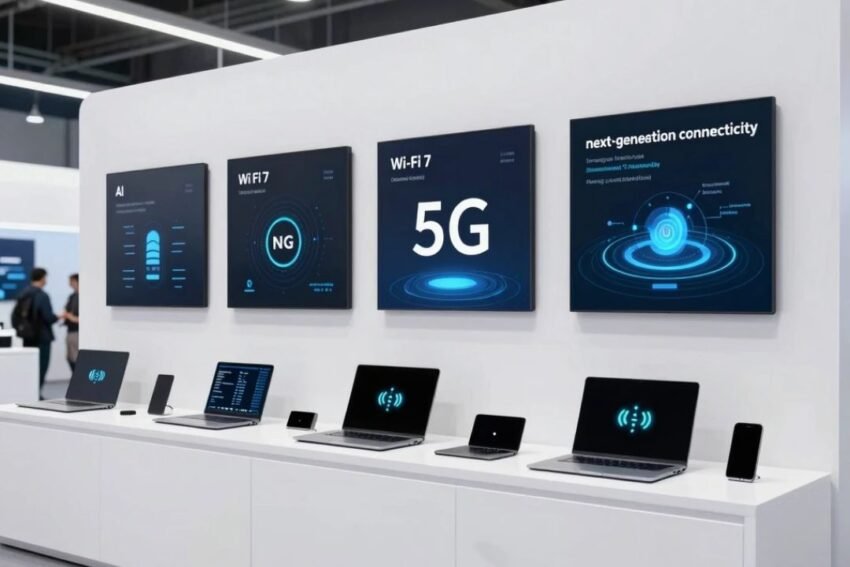
Technologies such as AI-powered networking, Wi-Fi 7, 5G-Advanced, edge computing, cloud networking, network automation, zero trust security, fiber internet, and intelligent traffic management are shaping the next generation of connectivity.
Understanding the top internet and networking trends in 2026 can help consumers, businesses, developers, and IT professionals prepare for the future.
1. AI-Powered Networking
Artificial intelligence is becoming one of the most important trends in networking.
Traditional network management often requires administrators to monitor systems, analyze traffic, identify problems, and make configuration changes manually.
AI can automate many of these tasks.
AI-powered networks can potentially:
- Detect unusual traffic
- Identify performance problems
- Predict network failures
- Optimize bandwidth
- Analyze network behavior
- Automate configuration
- Improve security
- Reduce downtime
Instead of simply reacting to network problems, intelligent systems can increasingly predict and prevent them.
2. Wi-Fi 7
Wi-Fi 7 is an important development in wireless networking.
It is designed to provide higher performance, lower latency, and improved reliability compared with previous Wi-Fi generations.
Wi-Fi 7 introduces technologies designed to improve wireless connectivity in environments with many connected devices.
Potential benefits include:
- Higher throughput
- Lower latency
- Better network efficiency
- Improved reliability
- Better performance with multiple devices
Wi-Fi 7 can be particularly useful for high-bandwidth applications such as 4K and 8K streaming, cloud gaming, augmented reality, virtual reality, and demanding business applications.
3. 5G-Advanced and Mobile Connectivity
5G continues to expand, while the industry is moving toward more advanced 5G capabilities.
5G-Advanced aims to improve areas such as:
- Network efficiency
- Reliability
- Mobility
- Positioning
- AI integration
- Industrial connectivity
Mobile networks are becoming more than smartphone connections.
They can support:
- Smart cities
- Industrial IoT
- Connected vehicles
- Drones
- Robotics
- Fixed wireless access
- Remote operations
As these applications grow, advanced mobile networking will become increasingly important.
4. The Growth of Fiber Internet
Fiber-optic internet remains one of the most important technologies for high-speed connectivity.
Fiber can provide high bandwidth, low latency, and reliable long-distance communication.
It supports the infrastructure behind:
- Broadband services
- Data centers
- Cloud platforms
- Internet backbones
- Business networks
- 5G infrastructure
As internet traffic increases, fiber networks will continue to play a major role in global connectivity.
5. Edge Computing
Edge computing moves computing resources closer to users and connected devices.
Traditional cloud systems may send data to centralized data centers. Edge computing can process certain workloads closer to where the data is generated.
This can reduce latency.
Edge computing is especially useful for:
- IoT
- Autonomous vehicles
- Industrial automation
- Online gaming
- AR and VR
- Smart cities
- Real-time AI
The combination of cloud and edge computing can provide flexible infrastructure for modern applications.
6. Cloud Networking
Cloud networking is becoming increasingly important as organizations move applications and infrastructure into cloud environments.
Cloud networks can provide:
- Flexible infrastructure
- Virtual networks
- Automated scaling
- Remote access
- Global connectivity
- Integrated security
Businesses can use cloud networking to connect employees, applications, data centers, branch offices, and cloud services.
7. Network Automation
Network automation is reducing the amount of manual work required to operate complex networks.
Automation can help with:
- Configuration
- Monitoring
- Updates
- Security policies
- Traffic management
- Troubleshooting
Automation can improve consistency and reduce human errors.
As networks become more complicated, automation will become increasingly important for IT teams.
8. Zero Trust Networking
Cybersecurity is becoming a central part of networking.
Zero Trust follows the principle:
Never trust automatically. Always verify.
Instead of assuming that users or devices inside a network are safe, Zero Trust continuously evaluates access.
Important components include:
- Multi-factor authentication
- Least-privilege access
- Identity verification
- Device security
- Network segmentation
- Continuous monitoring
Zero Trust is especially important for cloud environments and remote work.
9. Network Security with AI
Cyber threats are becoming more sophisticated.
AI can help network security systems analyze large volumes of traffic and identify suspicious patterns.
Potential applications include:
- Threat detection
- Anomaly detection
- Automated response
- Bot detection
- DDoS monitoring
- Malware analysis
AI does not eliminate cybersecurity risks, but it can help security teams process information faster.
10. Internet of Things Growth
The Internet of Things continues to expand.
More physical devices are becoming connected to networks.
Examples include:
- Smart appliances
- Wearable devices
- Security cameras
- Industrial sensors
- Connected vehicles
- Smart meters
- Medical devices
The growth of IoT creates greater demand for scalable and secure networking.
11. Smart Home Networking
Smart homes are becoming more connected.
Modern households may have:
- Smart TVs
- Security cameras
- Smart speakers
- Smart lighting
- Thermostats
- Appliances
- Gaming systems
- Wearable devices
This creates greater demand for reliable home networking.
Modern Wi-Fi technologies and intelligent routers can help manage large numbers of connected devices.
12. Fixed Wireless Access
Fixed Wireless Access, or FWA, uses wireless networks to provide broadband connectivity to homes and businesses.
5G can make FWA an alternative to traditional wired broadband in some areas.
Potential advantages include:
- Faster deployment
- Flexible installation
- Broadband access in underserved areas
- Reduced dependence on physical cables
FWA can be particularly useful where building fiber infrastructure is difficult or expensive.
13. Network Slicing
Network slicing allows a physical mobile network to support multiple logical network environments.
Different network slices can be optimized for different requirements.
For example:
- One slice could support high-speed consumer applications.
- Another could support industrial devices.
- Another could support low-latency services.
Network slicing can help service providers manage different workloads more efficiently.
14. Private 5G Networks
Private 5G networks are becoming increasingly important for businesses and industrial environments.
Organizations can deploy dedicated mobile connectivity for:
- Manufacturing
- Warehouses
- Ports
- Hospitals
- Universities
- Energy facilities
Private 5G can support reliable communication for connected equipment and industrial applications.
15. Networking for AI Workloads
AI applications require significant computing and networking resources.
Large AI systems can move enormous amounts of data between processors, memory, storage, and users.
This increases demand for:
- High-speed networking
- Low-latency connections
- Advanced data center networks
- High-bandwidth interconnects
AI is therefore influencing not only software but also the design of modern network infrastructure.
16. Data Center Networking
Data centers are becoming more important as cloud and AI workloads expand.
Modern data center networks need to support:
- Large-scale computing
- Cloud services
- AI workloads
- Storage systems
- High-speed data transfer
Network performance can directly influence application performance.
As AI infrastructure expands, data center networking will continue to evolve.
17. Cloud Gaming and Low-Latency Networks
Cloud gaming depends heavily on network performance.
Games are processed on remote servers and streamed to players.
This requires:
- Low latency
- Stable connectivity
- High bandwidth
- Reliable routing
Edge computing and advanced mobile and Wi-Fi technologies could improve cloud gaming experiences.
18. Networking for AR and VR
Augmented reality and virtual reality applications require responsive networks.
Users expect digital environments to react quickly to movement.
High latency can negatively affect the experience.
Advanced Wi-Fi, 5G, edge computing, and high-performance cloud infrastructure can help support immersive applications.
19. Connected Vehicles
Vehicles are becoming increasingly connected.
Modern vehicles can communicate with:
- Cloud platforms
- Navigation systems
- Other vehicles
- Traffic infrastructure
- Mobile networks
Networking can support:
- Real-time traffic information
- Remote diagnostics
- Software updates
- Safety systems
- Fleet management
Future connected vehicles will require reliable and secure communication.
20. Smart Cities
Smart city infrastructure uses networking to connect systems across urban environments.
Applications can include:
- Traffic management
- Public transportation
- Smart lighting
- Environmental monitoring
- Security systems
- Waste management
- Energy management
5G, fiber, Wi-Fi, IoT, and edge computing can work together to support these systems.
21. Better Home Routers
Home routers are becoming more advanced.
Modern routers increasingly provide:
- Wi-Fi 6 or Wi-Fi 7
- Mesh networking
- Parental controls
- Security features
- Device management
- Automatic updates
Mesh Wi-Fi systems can also improve coverage in larger homes.
22. Mesh Networking
Mesh networking uses multiple access points to create broader wireless coverage.
Instead of relying on one router, multiple nodes can work together.
Benefits may include:
- Better coverage
- Fewer dead zones
- Easier expansion
- Improved roaming
Mesh networks are becoming increasingly popular for homes, offices, and large buildings.
23. Internet Security and Encryption
As more services move online, encryption remains essential.
Secure networking uses technologies that protect information during transmission.
HTTPS, VPNs, encrypted wireless connections, and secure authentication can help protect users and organizations.
However, encryption should be combined with other security measures.
24. IPv6 Adoption
The continued growth of connected devices makes IPv6 increasingly important.
IPv6 provides a much larger address space than IPv4.
It also introduces improvements in areas such as network configuration and modern internet architecture.
As more networks support IPv6, organizations will need to ensure their infrastructure is prepared.
25. Green Networking
Energy efficiency is becoming a major consideration.
Network equipment, data centers, wireless infrastructure, and cloud systems consume energy.
Future networking technologies will increasingly focus on:
- Efficient hardware
- Intelligent power management
- Renewable energy
- Efficient data centers
- Automated resource allocation
AI can also help identify opportunities to reduce unnecessary resource usage.
Benefits of Modern Networking Trends
These technologies can provide several benefits.
Faster Connectivity
Modern networks can deliver higher speeds and lower latency.
Better Reliability
Automation and intelligent monitoring can help reduce downtime.
Improved Security
AI, Zero Trust, encryption, and advanced monitoring can strengthen protection.
Greater Scalability
Cloud and software-defined infrastructure can expand as demand grows.
Better User Experiences
Low-latency networking improves gaming, streaming, communication, and interactive applications.
Support for Innovation
Advanced networks enable AI, IoT, robotics, smart cities, and connected vehicles.
Challenges of Next-Generation Networking
Despite the benefits, several challenges remain.
Cybersecurity Risks
More connected devices can create more opportunities for attackers.
Infrastructure Costs
Advanced networking infrastructure can require significant investment.
Complexity
Modern networks combine cloud, edge, wireless, fiber, AI, and security technologies.
Skills Shortage
Organizations may need professionals with advanced networking and cybersecurity skills.
Privacy
Connected devices can generate large amounts of personal and operational data.
How Businesses Can Prepare
Businesses can prepare for the future by:
- Auditing existing network infrastructure.
- Improving cybersecurity.
- Adopting strong identity controls.
- Planning for cloud connectivity.
- Using automation where practical.
- Monitoring network performance.
- Preparing for IPv6.
- Evaluating Wi-Fi 7 for suitable environments.
- Considering edge computing for low-latency applications.
- Training IT teams in modern networking technologies.
Businesses should adopt technologies according to their actual requirements rather than following trends blindly.
How Consumers Can Prepare
Home users can also benefit from modern networking.
Consider:
- Upgrading outdated routers.
- Using modern Wi-Fi standards.
- Improving router placement.
- Using Ethernet for demanding devices.
- Securing Wi-Fi networks.
- Updating router firmware.
- Using mesh networking when necessary.
- Choosing an internet plan based on actual usage.
Gamers, remote workers, content creators, and smart-home users may benefit the most from better network infrastructure.
The Future of Internet and Networking
The future of internet and networking will likely be more intelligent, automated, distributed, and secure.
AI will increasingly help networks monitor themselves and optimize performance.
Wi-Fi 7 and future wireless standards will improve local connectivity.
5G-Advanced and eventually 6G will expand mobile networking capabilities.
Cloud and edge computing will work together to support applications requiring scalability and low latency.
IoT will continue connecting physical devices, while private networks will support industrial applications.
At the same time, cybersecurity will become an essential part of network design rather than an optional feature.
Conclusion
The top internet and networking trends in 2026 demonstrate how quickly connectivity is evolving. Technologies such as AI-powered networking, Wi-Fi 7, 5G-Advanced, fiber internet, edge computing, cloud networking, network automation, Zero Trust, IoT, and private 5G are shaping the next generation of digital infrastructure.
These developments are not limited to faster internet speeds. They are changing how businesses operate, how smart devices communicate, how AI systems process information, and how people interact with digital services.
For consumers, modern networking can deliver better streaming, gaming, remote work, smart-home connectivity, and mobile experiences. For businesses, advanced networks can improve productivity, security, scalability, automation, and digital transformation.
However, organizations must also address cybersecurity, privacy, cost, complexity, and infrastructure challenges.
The future of networking will depend on creating systems that are not only fast but also secure, reliable, intelligent, scalable, and energy-efficient.
As AI, cloud computing, IoT, edge computing, and connected devices continue to expand, networking will remain one of the most important foundations of the modern digital economy.